
Buzz
Active Collaboration for Insights Analysis in Market Research — and How AI Is Changing the Game
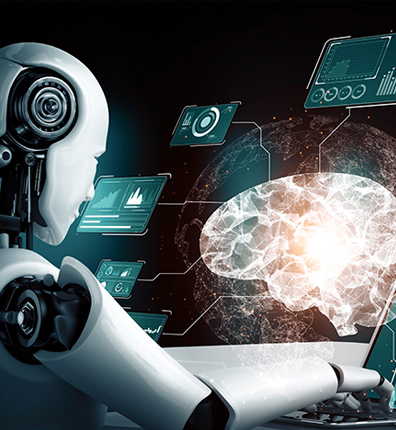
As AI takes on more operational tasks, researchers and consultants aren’t becoming obsolete — they’re becoming more strategic.
In market research, data alone isn’t enough. What separates good insights from great ones is how we analyze, interpret, and act on that data — and increasingly, who or what we collaborate with.
At Fieldable Research, we’ve long believed in the power of active, human collaboration to generate impactful insights. But now, with the rapid integration of AI tools in the research process, the very nature of collaboration is expanding — creating new possibilities, new efficiencies, and new responsibilities.
Why Active Collaboration Still Matters — and Even More with AI
AI doesn’t replace human insight. It amplifies it. It speeds up the analytical process, helps detect patterns at scale, and even suggests emerging themes. But without human collaboration to validate, contextualize, and prioritize, AI is just a smart assistant — not a decision-maker.
Here’s how the foundational benefits of active collaboration are evolving in the AI era:
| Core Benefit | Human-Centric Collaboration | AI-Enhanced Collaboration |
| Diversity of perspectives | Interdisciplinary teams interpret data from different lenses. | AI introduces new lenses (e.g., text clustering, sentiment analysis, topic modeling) to spark deeper discussions. |
| Faster problem solving | Iterative feedback helps catch mistakes early. | AI accelerates iteration (e.g., instant transcript analysis, survey data summarization), enabling faster cycles of refinement. |
| Stakeholder alignment | Shared understanding builds buy-in. | AI-generated visualizations and simulations can help stakeholders "see" the implications of insights faster. |
| Richer insights | Stories + data = actionable "aha" moments. | AI can analyze massive data sets quickly — but humans still turn those patterns into compelling narratives. |
How AI Is Shaping Collaborative Insight Workflows
Here’s what we’re seeing at Fieldable and across the industry when collaboration meets AI:
1. Faster Analysis, Same Human Judgment
Tools like GPT-4, MonkeyLearn, or ChatGPT Enterprise can now summarize interviews, cluster themes, or auto-tag responses in minutes. What used to take days now takes hours.
But it still takes a skilled team to decide which themes matter, which patterns are noise, and what story the data is truly telling. AI handles the speed — we handle the meaning.
2. Real-Time Co-Creation with AI
AI isn’t just behind the scenes anymore. It’s in the room — via collaborative dashboards, generative insight assistants, or real-time coders.
During insight workshops, for example, our teams may use AI to:
- Instantly visualize alternative segmentations
- Reframe findings in different strategic lenses (e.g., cost vs. loyalty)
- Simulate “what-if” scenarios based on the data
This lets stakeholders play with the data — not just read about it. Engagement rises, and so does clarity.
3. Democratizing the Insight Process
With AI tools embedded in platforms like Qualtrics, Power BI, Dovetail, and others, non-researchers can now explore findings more independently — filtering, querying, and generating basic interpretations on their own.
That’s powerful — but it also makes active collaboration even more essential. Why? Because without guidance, AI-generated insights can easily be misread or overinterpreted.
Fieldable’s role often shifts here: from sole analyst to collaborative sense-maker, helping clients interpret what the AI shows — and more importantly, what it doesn’t.
New Collaboration Dynamics: Human + Human + Machine
We’re moving into a model of triangular collaboration:
Human-to-human → Traditional interdisciplinary teamwork and stakeholder co-creation.
Human-to-AI → Using AI tools to accelerate or augment the insight process.
AI-mediated human collaboration → AI surfaces findings or contradictions that prompt human discussion, challenge assumptions, or uncover blind spots.
It’s no longer just about people working together — it’s also about how we collaborate with algorithms and integrate their output into our collective intelligence.
A New Role for Researchers: Insight Orchestrators
As AI takes on more operational tasks, researchers and consultants aren’t becoming obsolete — they’re becoming more strategic.
Their new responsibilities include:
- Designing workflows that integrate AI meaningfully without losing nuance.
- Facilitating cross-functional workshops that blend machine-generated insights with stakeholder experience.
- Ensuring ethical, inclusive, and bias-aware interpretations of AI-derived findings.
- Translating outputs into recommendations that matter, with a human voice.
In other words, we’re not just insight generators — we’re orchestrators of understanding.
Fieldable’s Evolving Approach
At Fieldable Research, we are actively incorporating AI into our workflows — while preserving the human-first, collaborative principles we’ve always believed in. Here's how:
Hybrid analysis: We use AI for first-pass coding, but always pair it with human review and refinement.
Real-time exploration tools: In workshops, we integrate dashboards and AI-assisted models that allow clients to explore data dynamically.
Stakeholder AI training: We support clients in understanding what AI can — and cannot — do, to promote smarter collaboration.
Ethical insight processes: We validate AI-derived outputs with qualitative depth to avoid oversimplification or cultural blind spots.
We don’t believe in AI doing all the work — we believe in AI doing the right work, so humans can focus on insight, interpretation, and action.
Looking Forward: A Call to Embrace AI-Driven Collaboration
The question isn’t whether AI will shape insight generation. It already is.
The real question is: How do we use it to deepen—not dilute—collaboration?
Here’s what we recommend:
- Train your teams to think critically about AI outputs.
- Design insight processes that blend speed with depth.
- Use AI as a stimulus for better discussion, not a substitute for thinking.
- Invest in insight orchestration skills — facilitation, interpretation, storytelling — as these will be the new differentiators.
Conclusion
AI is not replacing human collaboration — it’s redefining it.
Those who thrive in this new landscape will be the ones who:
Use AI to accelerate the mechanics of insight generation,
Maintain human collaboration to interpret, challenge, and act, and
Embrace the synergy between human curiosity and machine efficiency.
At Fieldable, we’re excited about what comes next — and we’re ready to help you build insight processes that are faster, smarter, and more collaborative than ever before.
Let’s explore it together.
menu